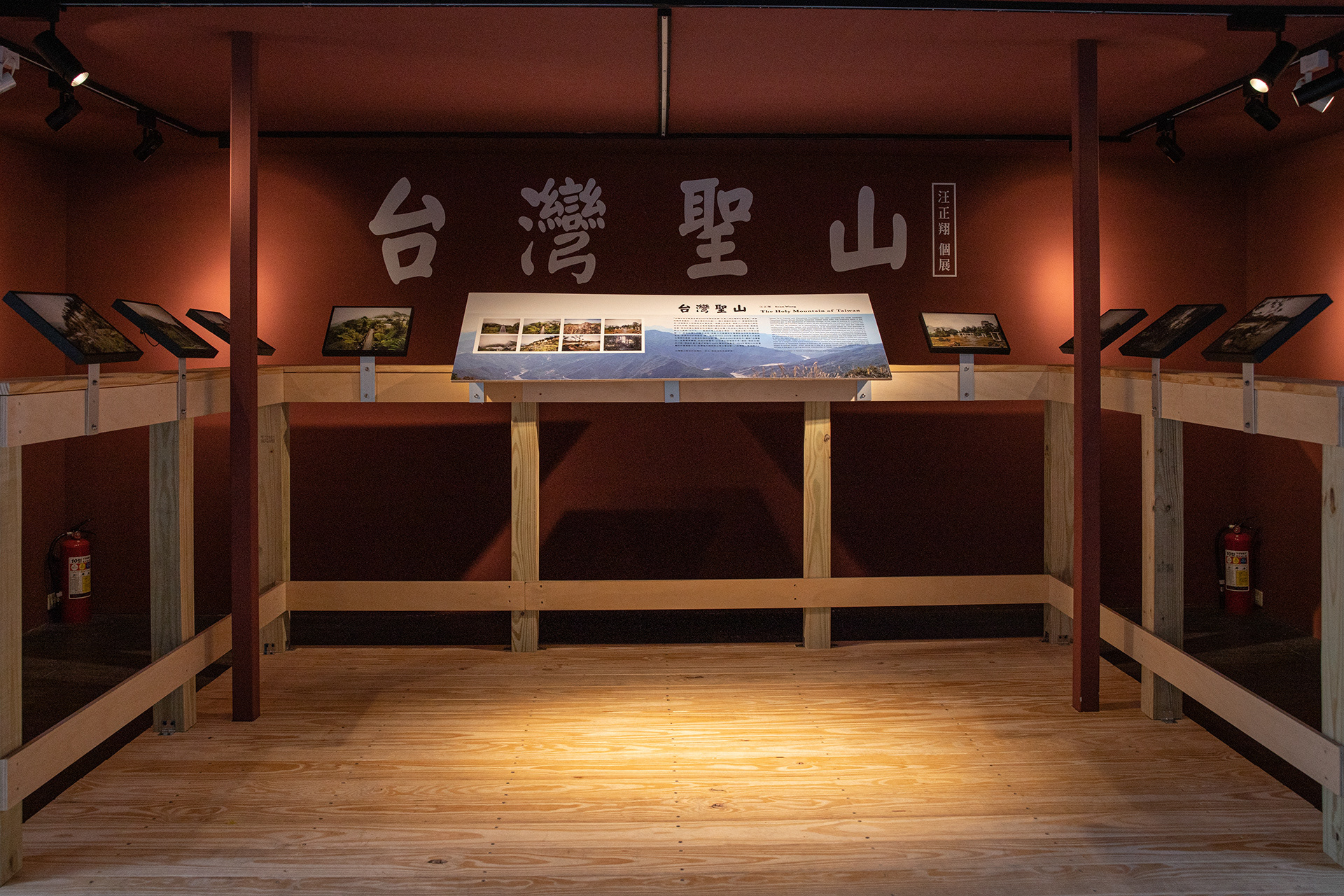
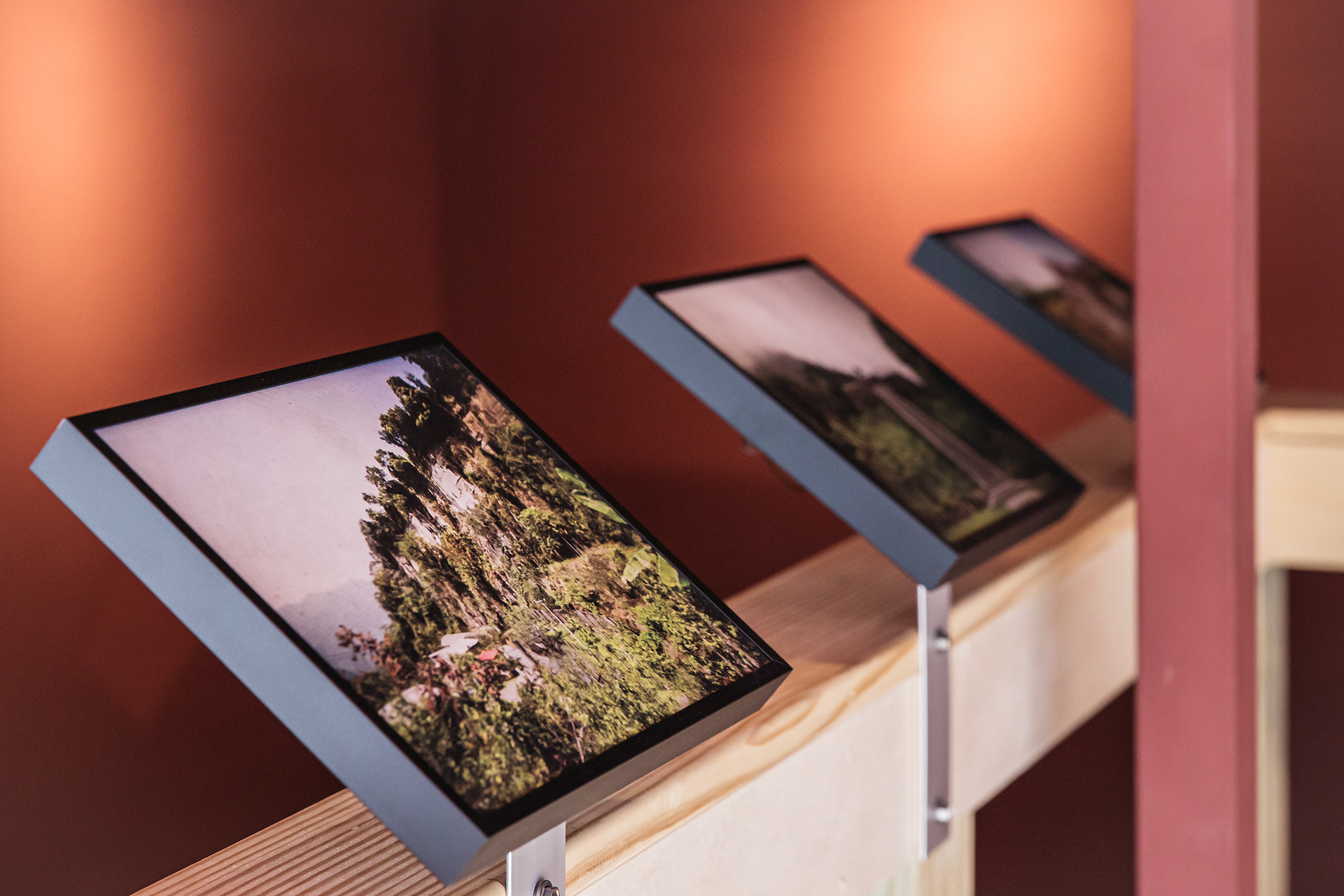
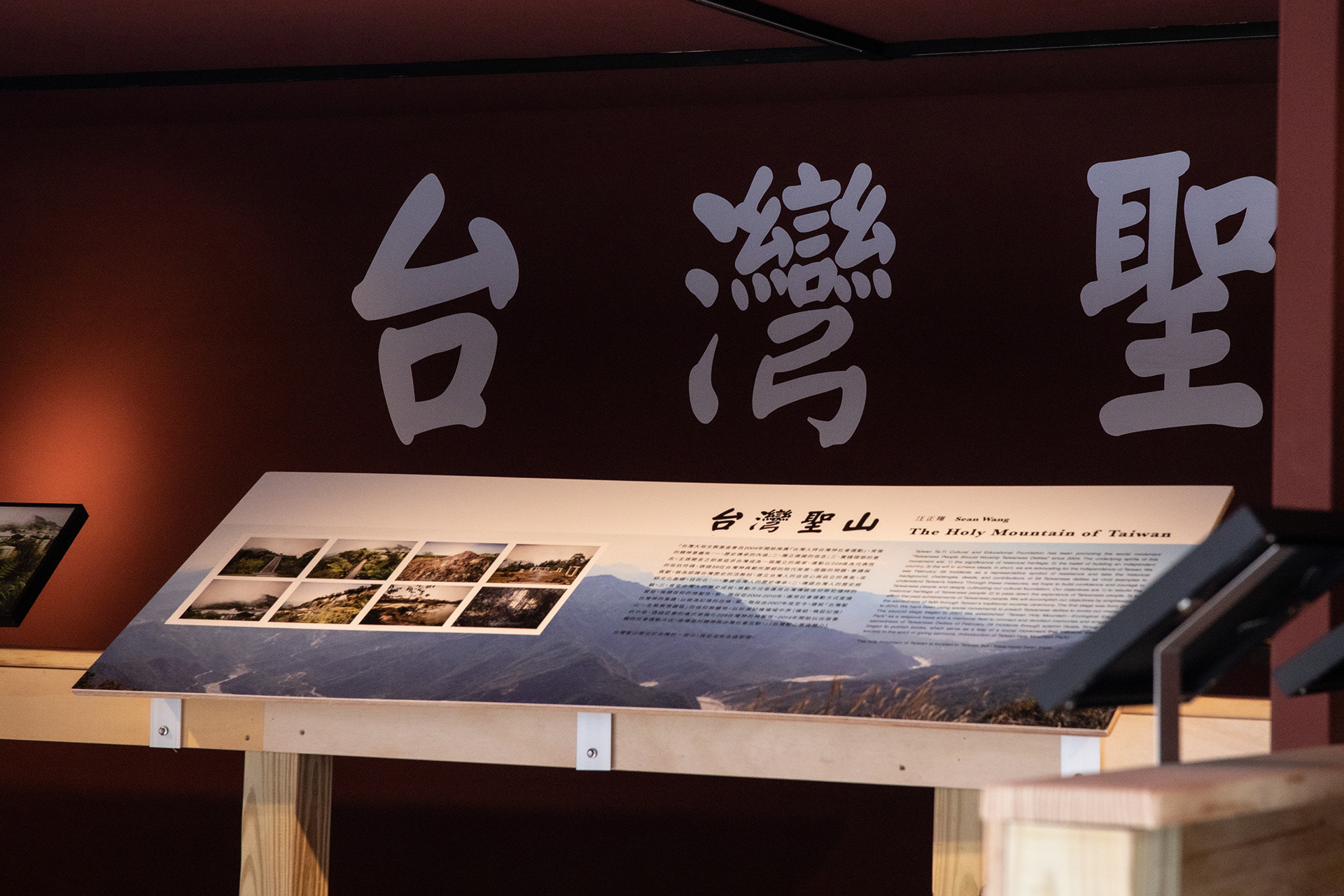
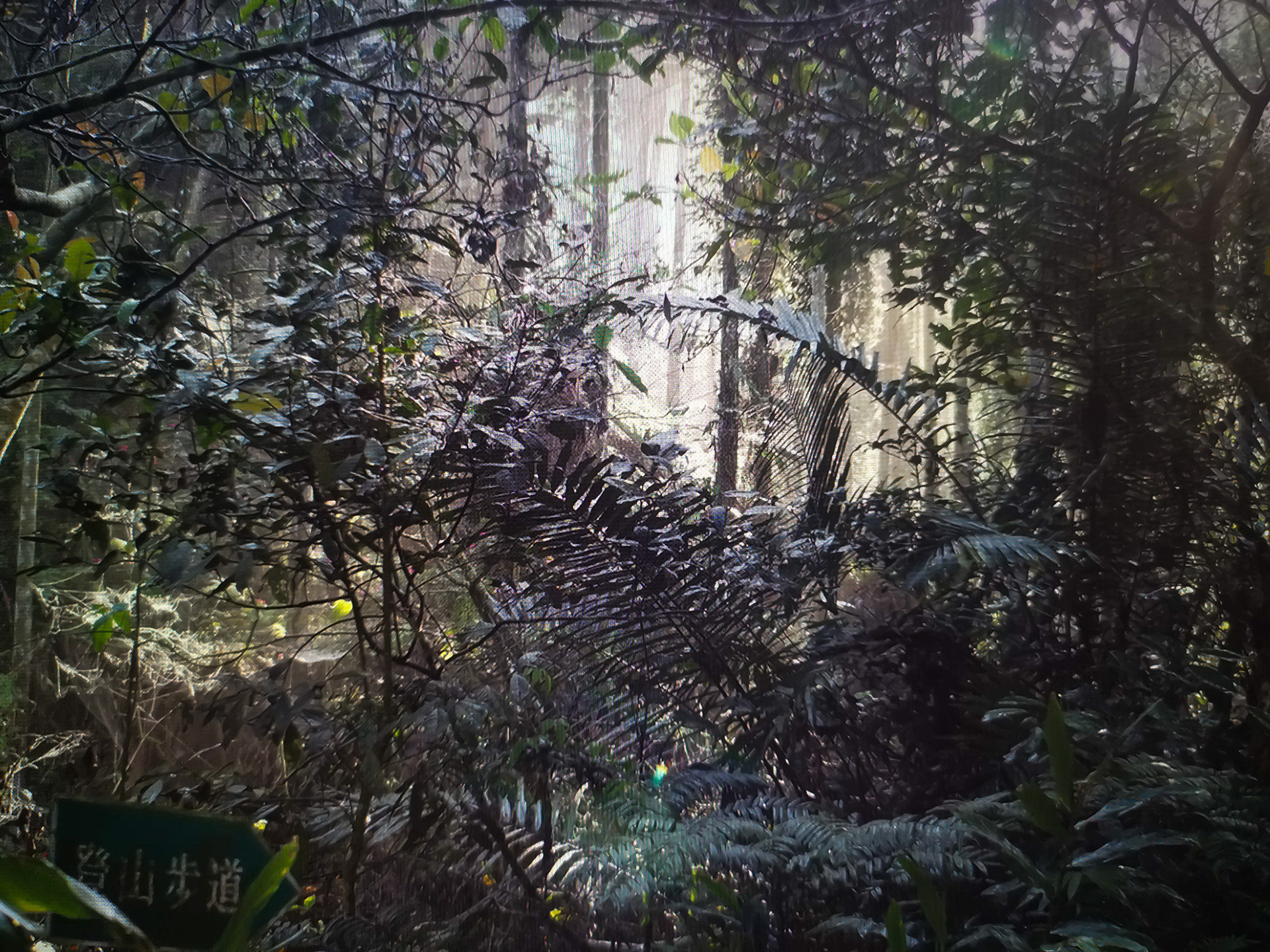
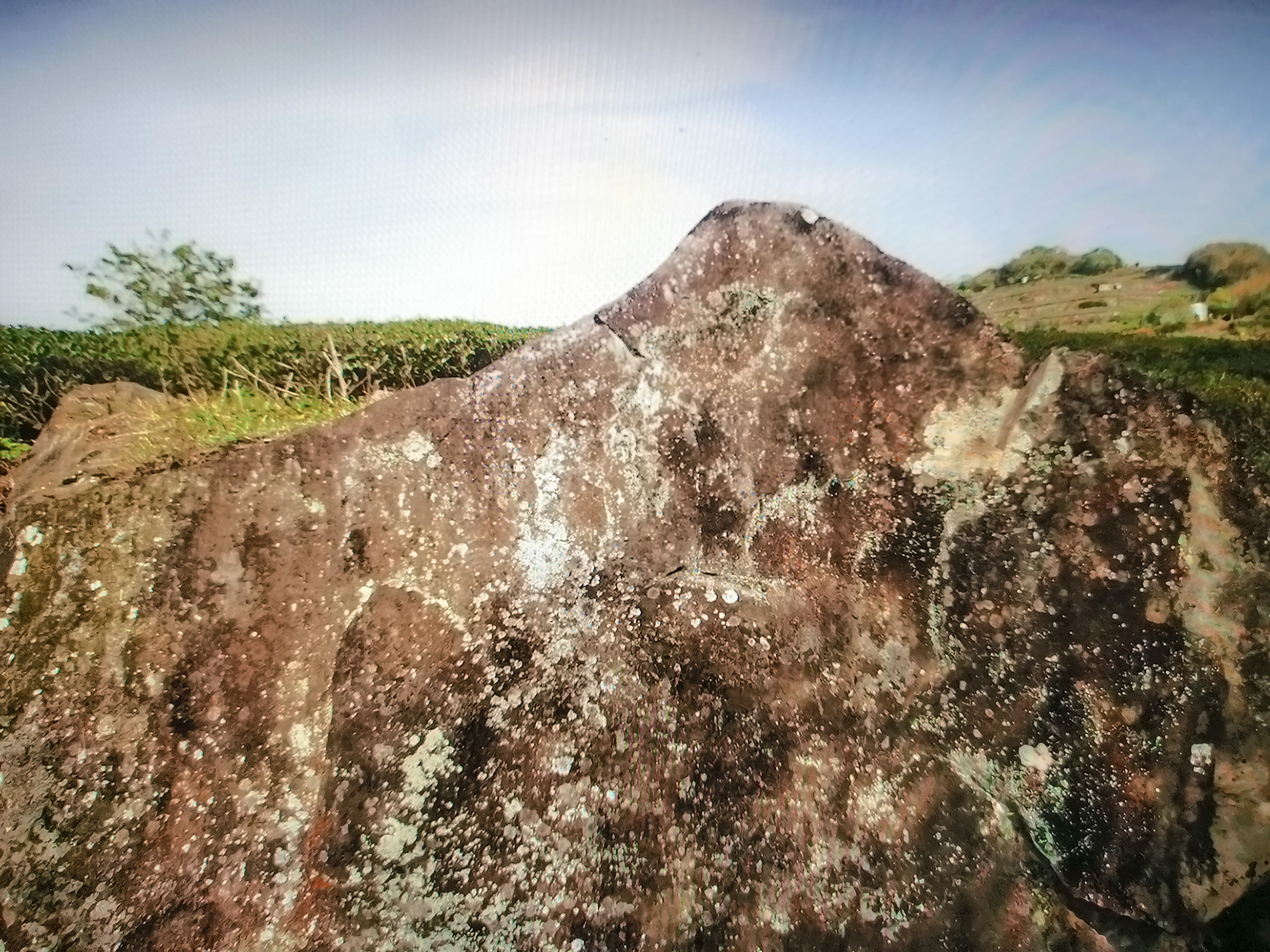
In 2019, I came across a website called "Taiwan Holy Mountain," which immediately captivated me. It described a group who built a religious park in the mountains to worship political victims as Taiwanese deities—a fusion of politics, religion, and culture that fascinated me. I initially planned to visit and document the site through photography, hoping to reveal deeper political, historical, and cultural threads in Taiwan. However, I hesitated. Could photographs truly capture the essence of the Holy Mountain? Could the mountain itself fully represent Taiwan? I realized that simple photography might not convey the deeper intentions behind this group's actions. What intrigued me was how they were attempting to "indicate" a particular existence or truth through Taiwan Holy Mountain. Instead, I created an installation embodying this concept. I built an observation deck featuring images resembling the Holy Mountain but intentionally enclosed it with exhibition walls. Viewers couldn’t see the distant scenery; they could only "experience" the observation deck and the display boards serving as "indicators," hinting at something beyond their sight. Through this work, I aim to prompt viewers to contemplate the relationship between representation and reality. By obstructing direct visual experience and presenting only symbols and suggestions, I invite them to explore what is being indicated rather than what is directly seen. This challenges the idea of experiencing a place solely through images and questions whether art can fully express complex ideas. Interestingly, Taiwan Holy Mountain does exist, but I have never been there. This reinforces the notion that sometimes the essence of a place or concept cannot be fully understood through personal visitation or traditional representation. True understanding requires exploration, interpretation, and introspection to grasp the deeper meanings hidden within cultural and political landscapes.