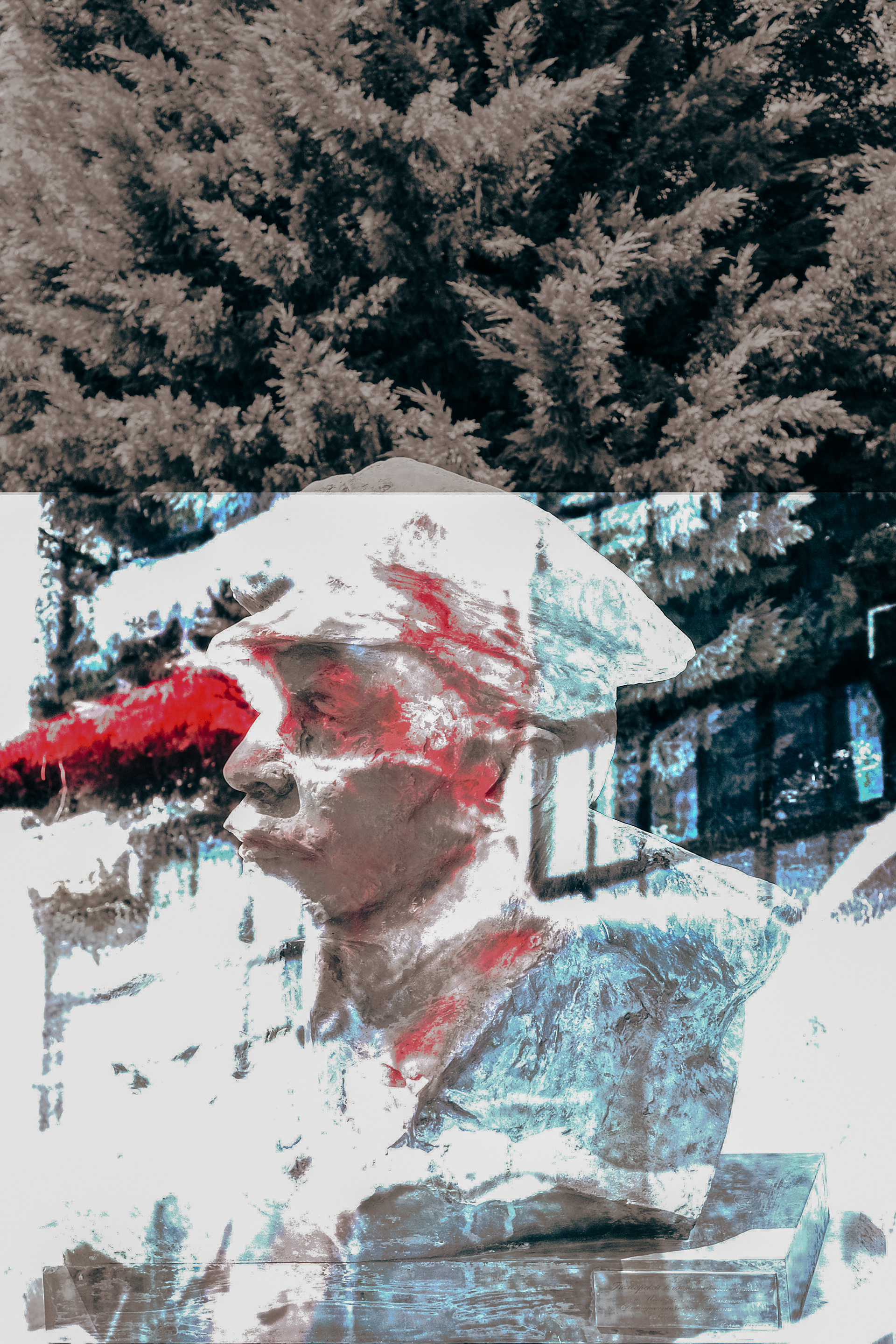
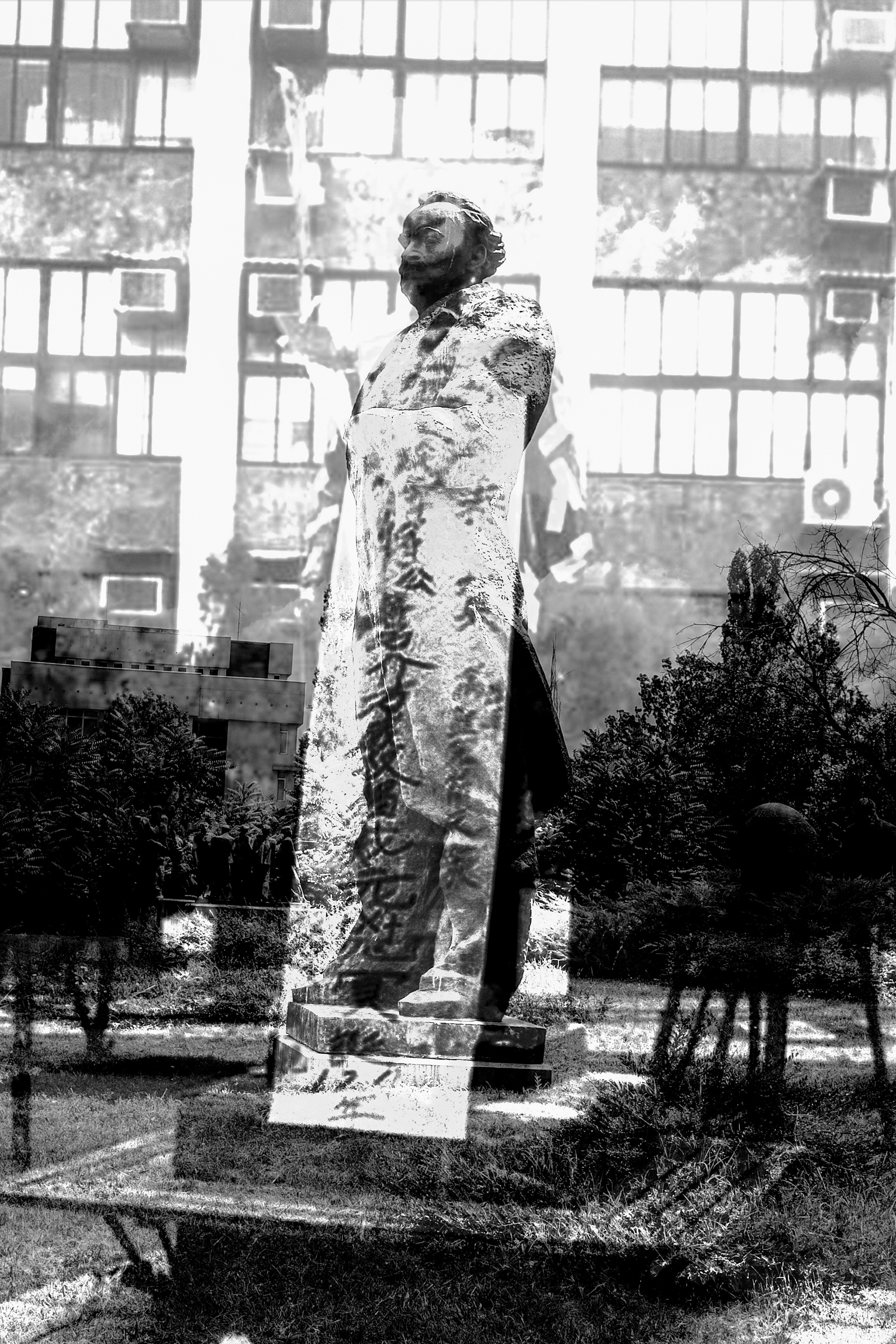
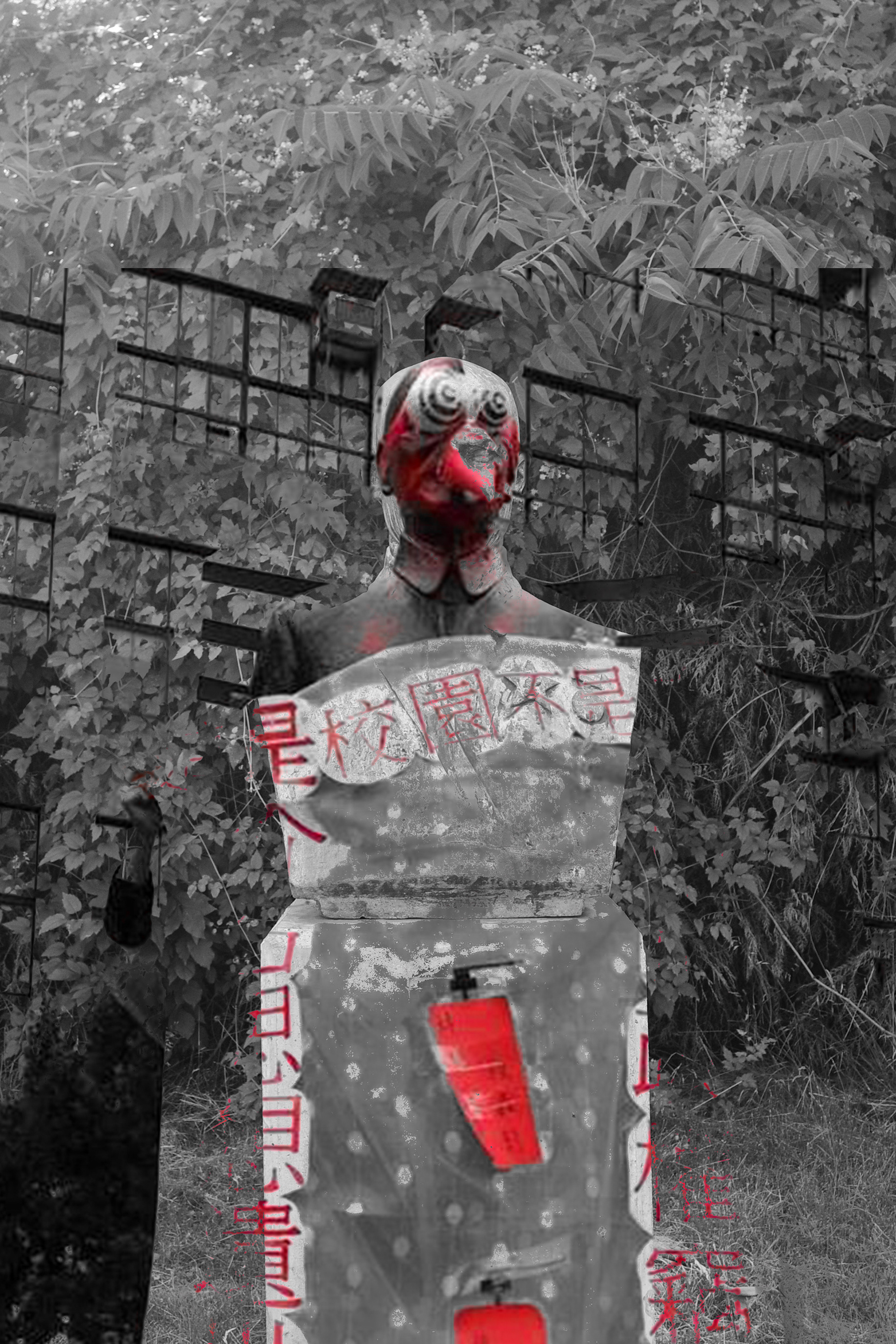
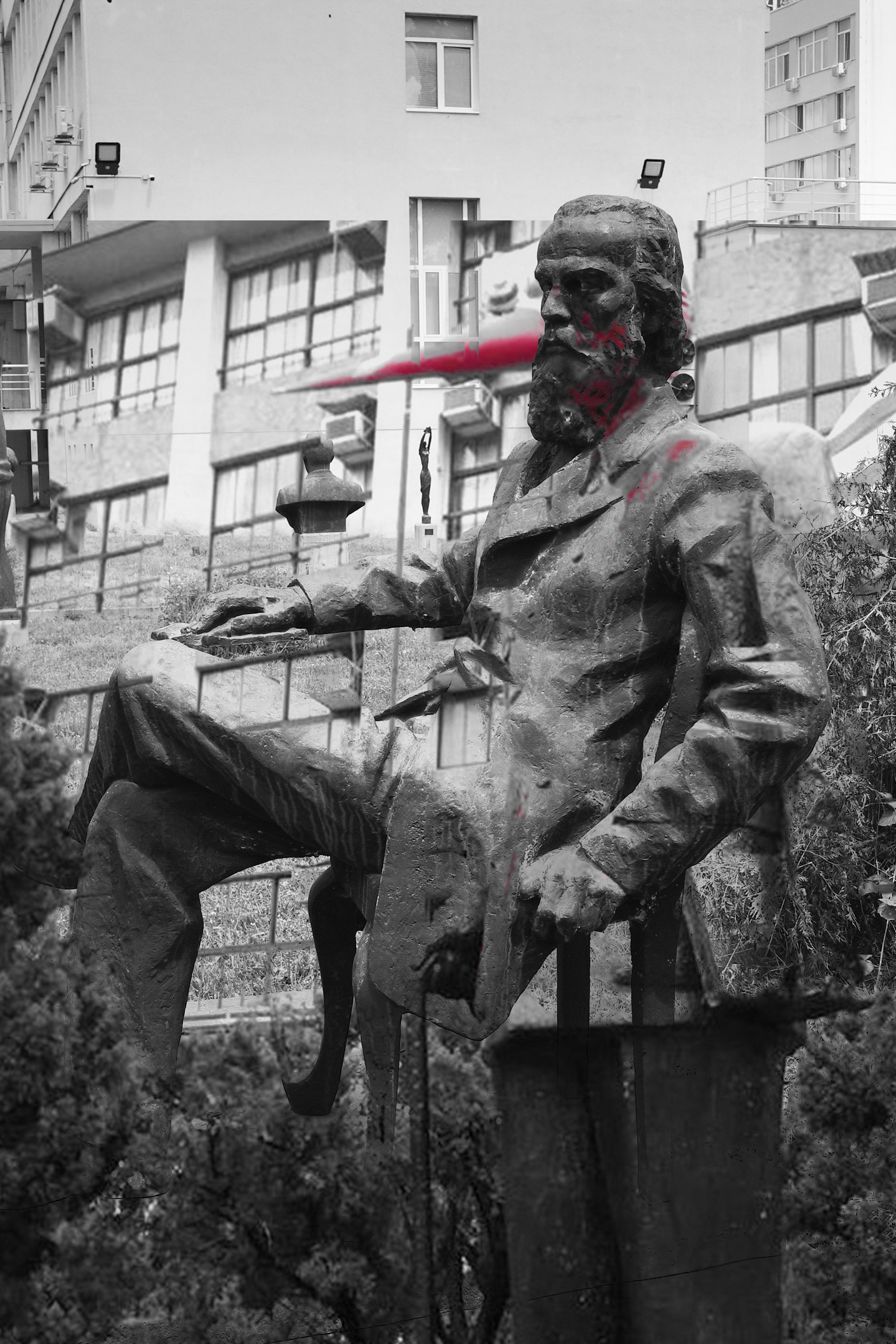
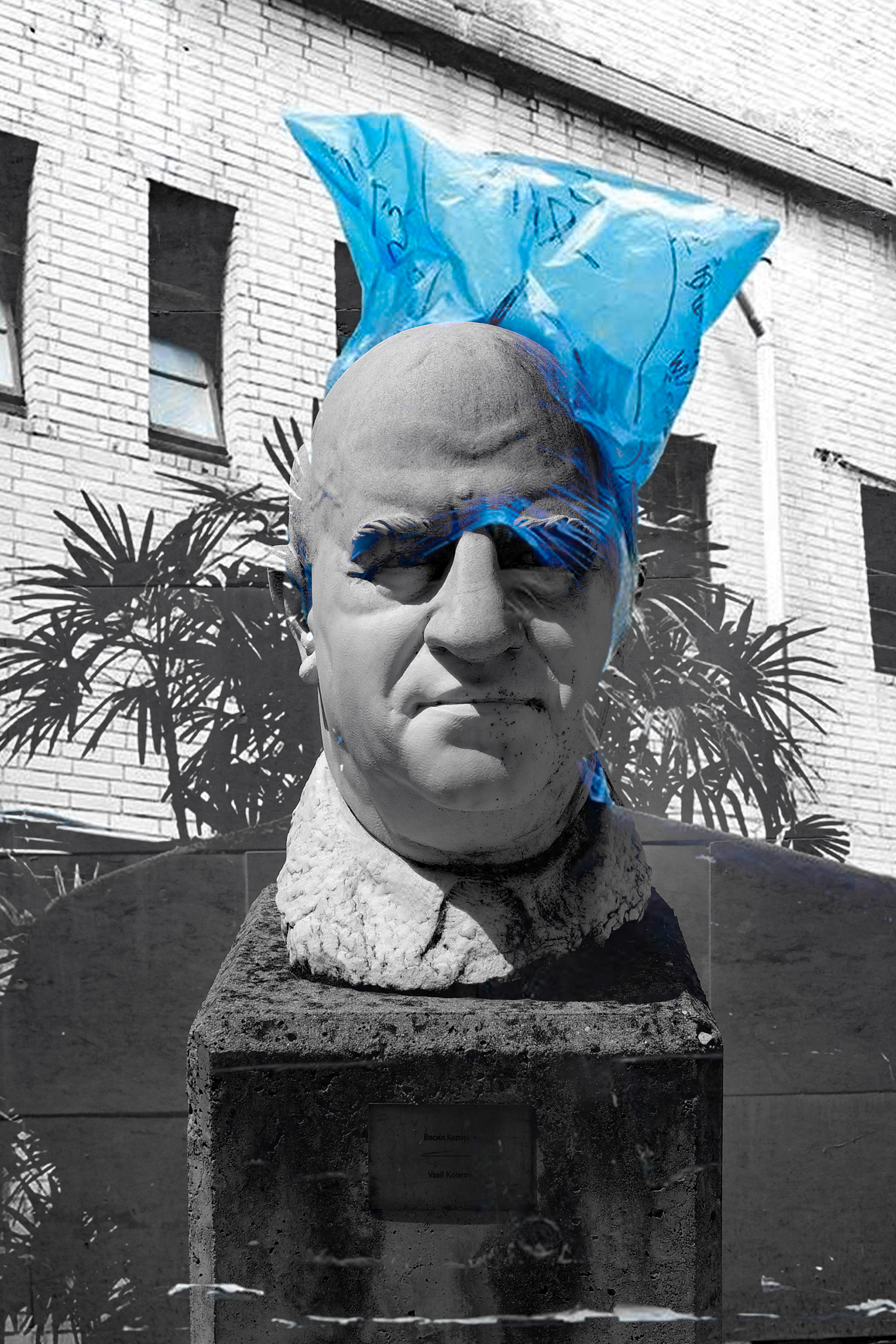
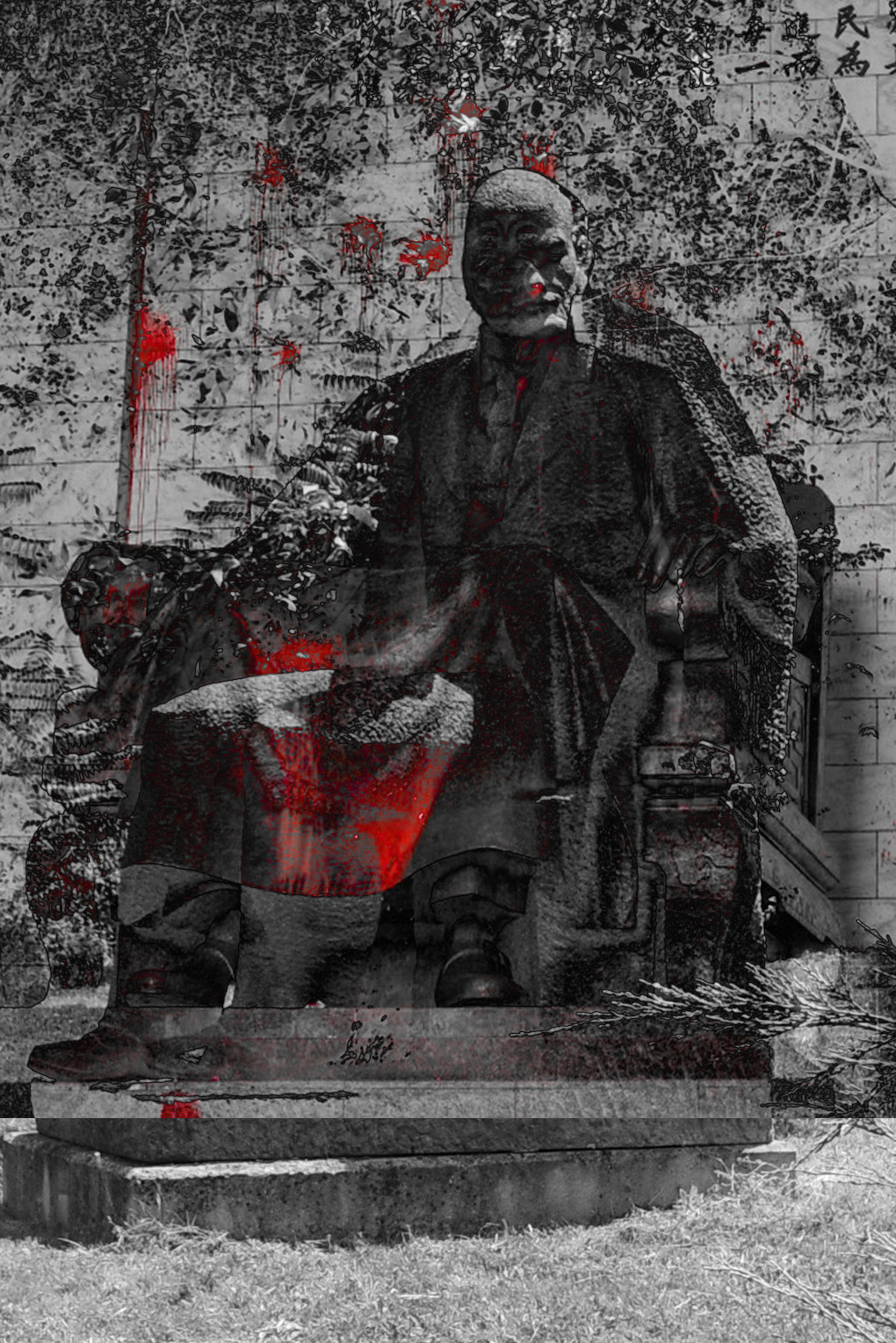
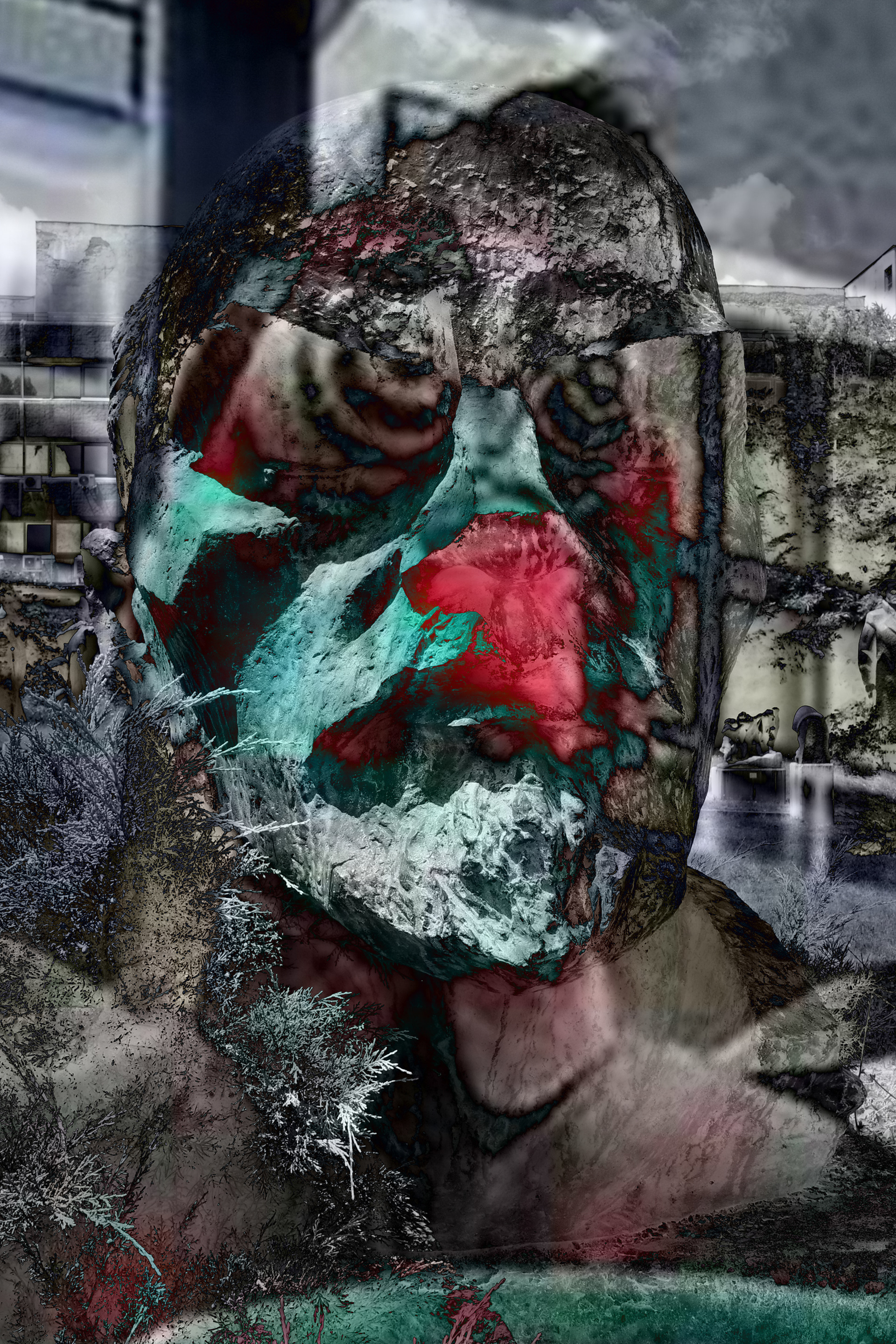
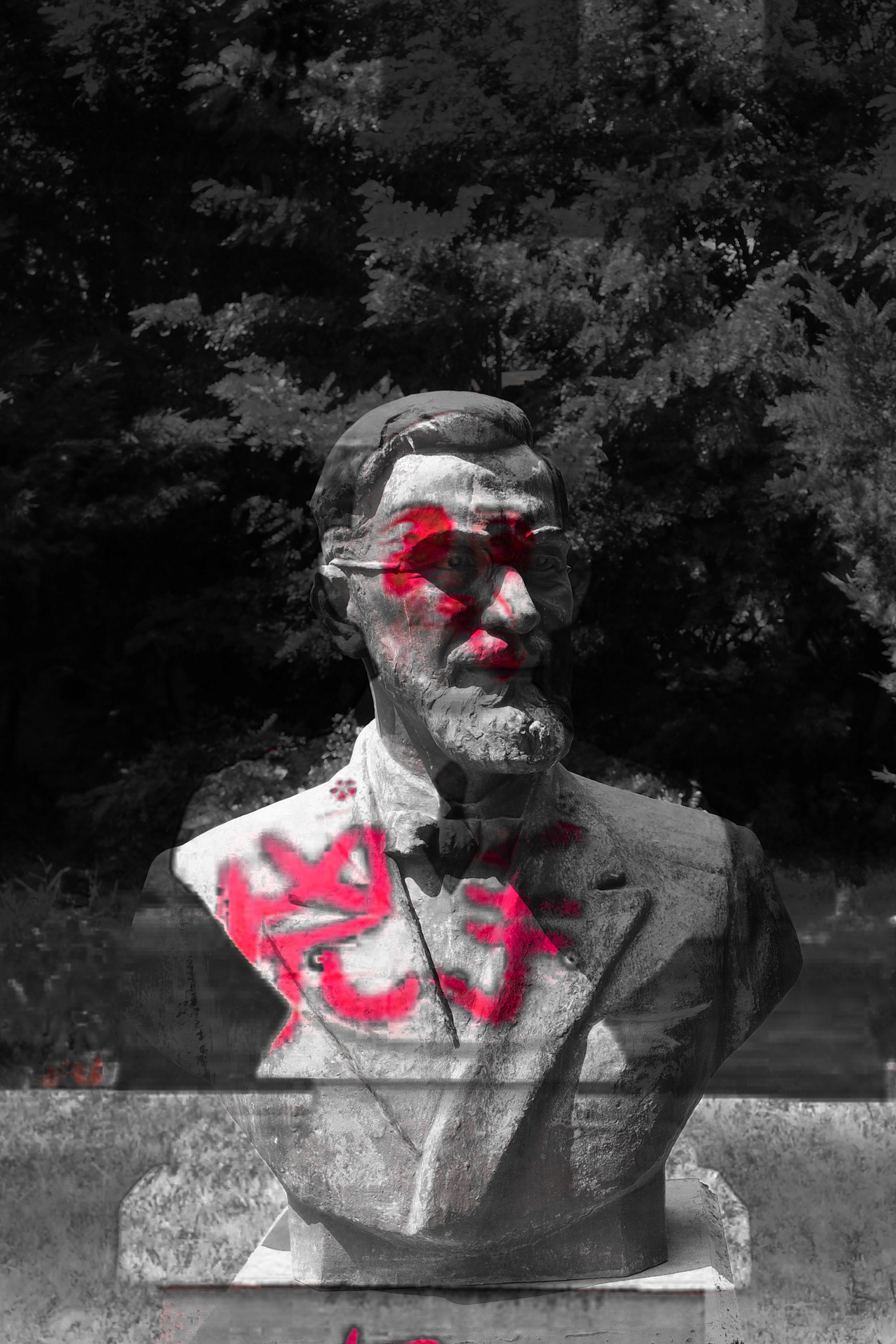
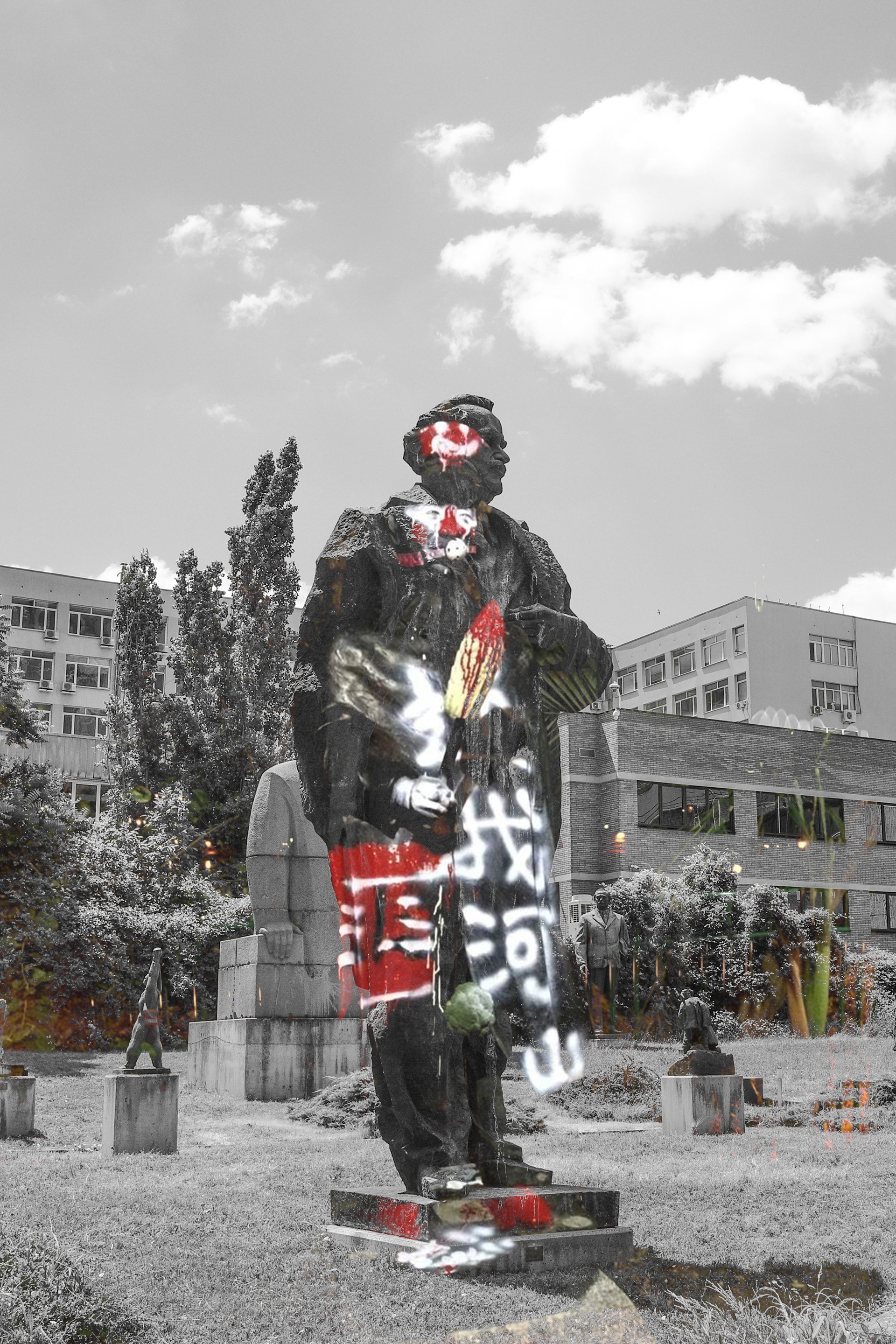
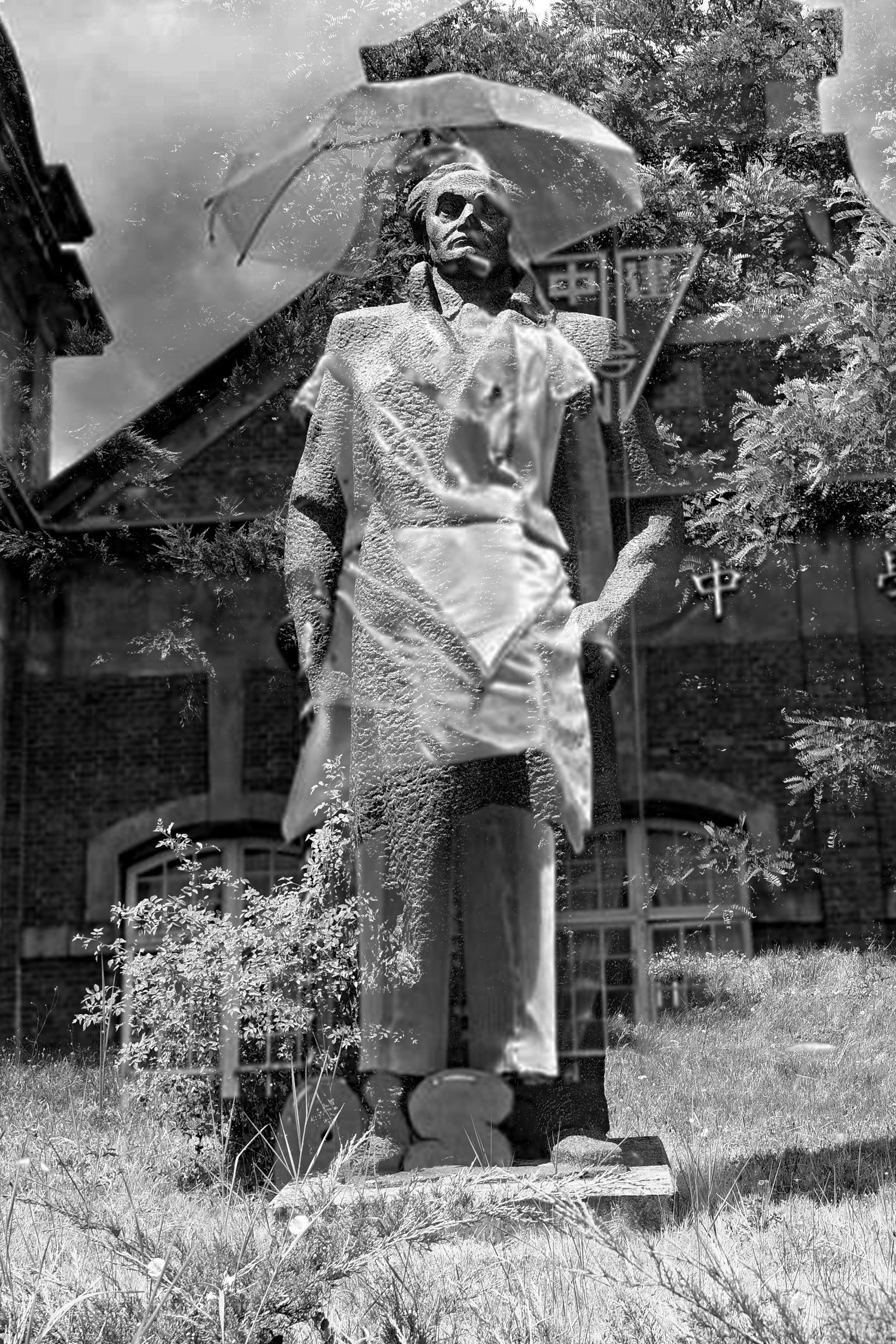
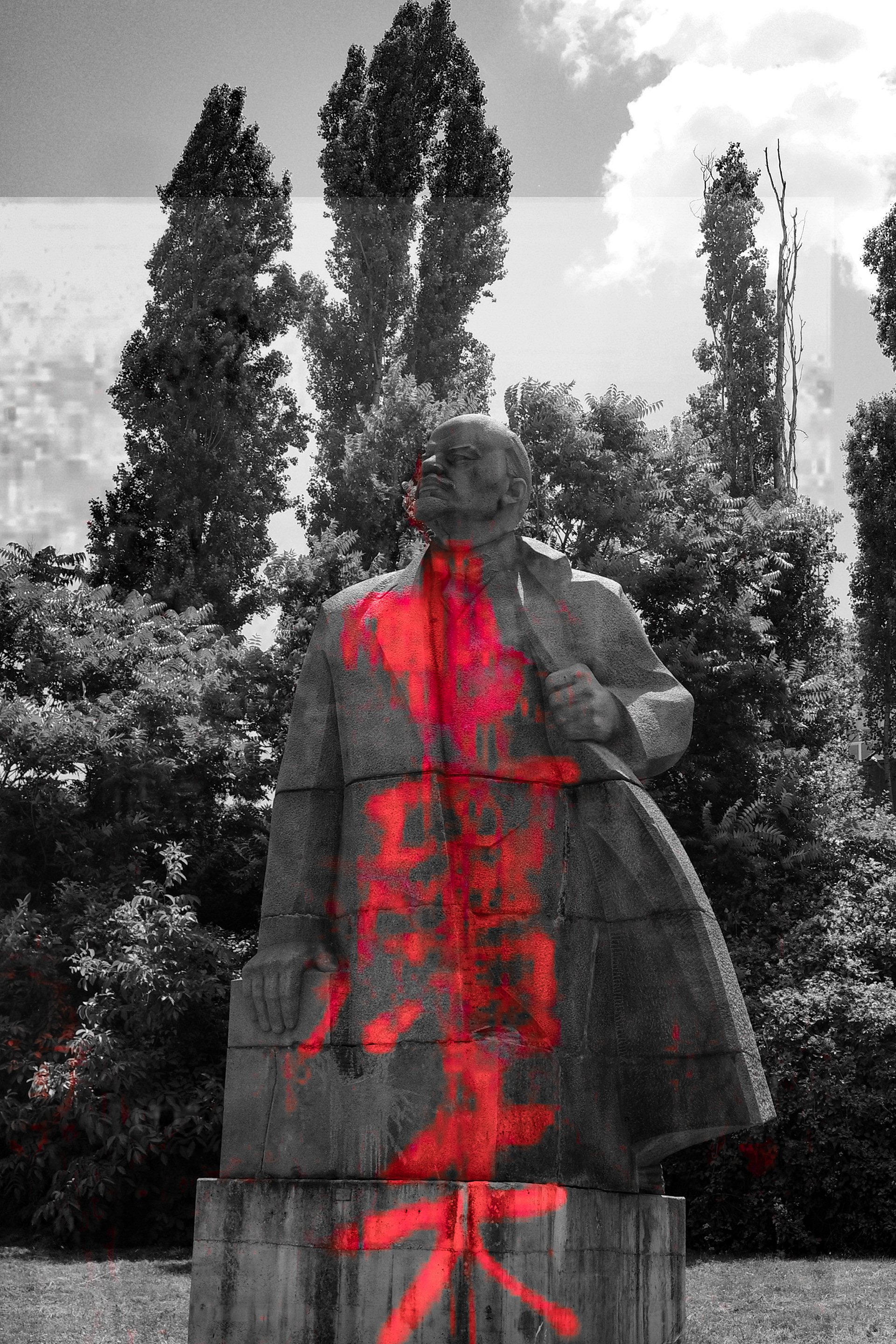
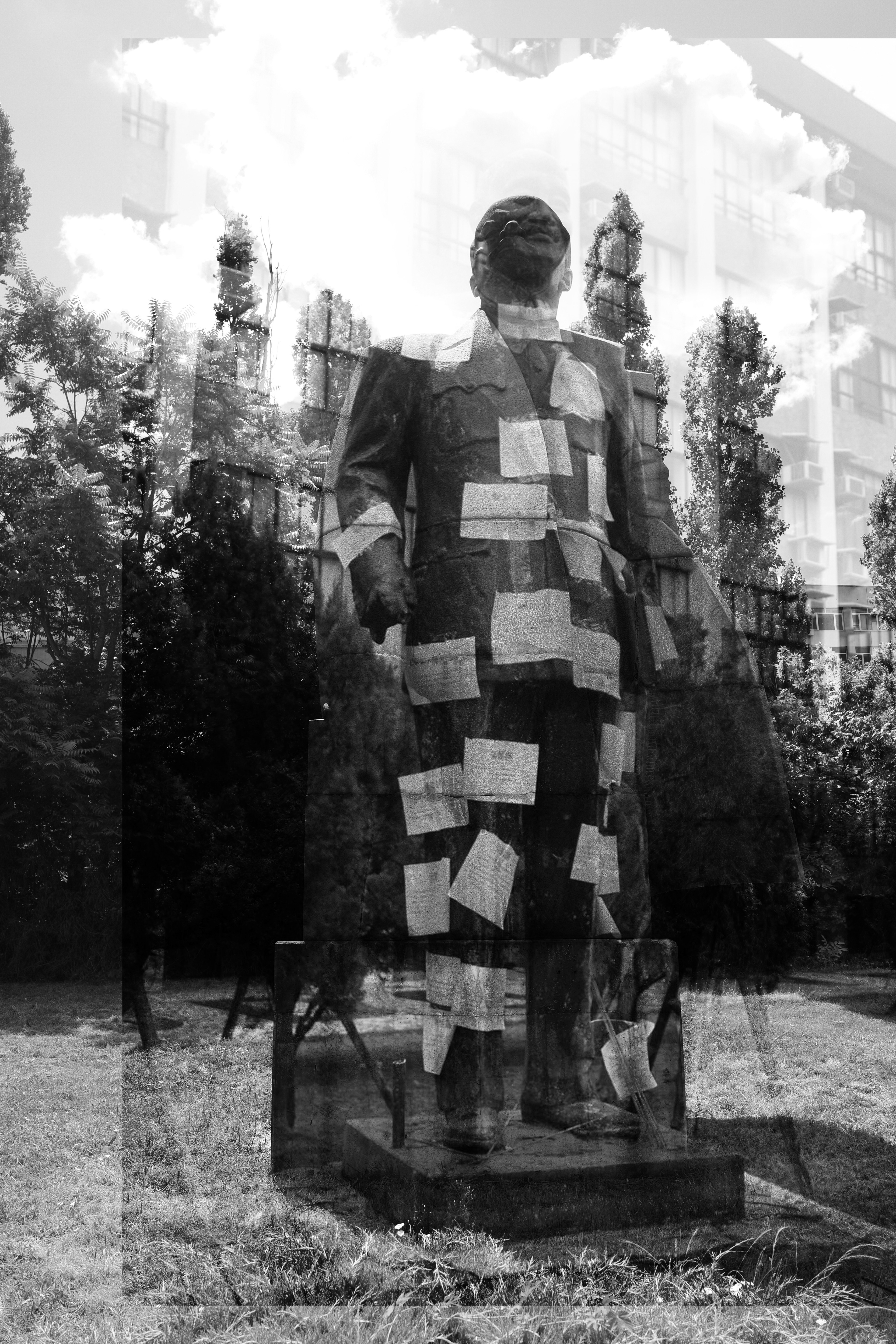
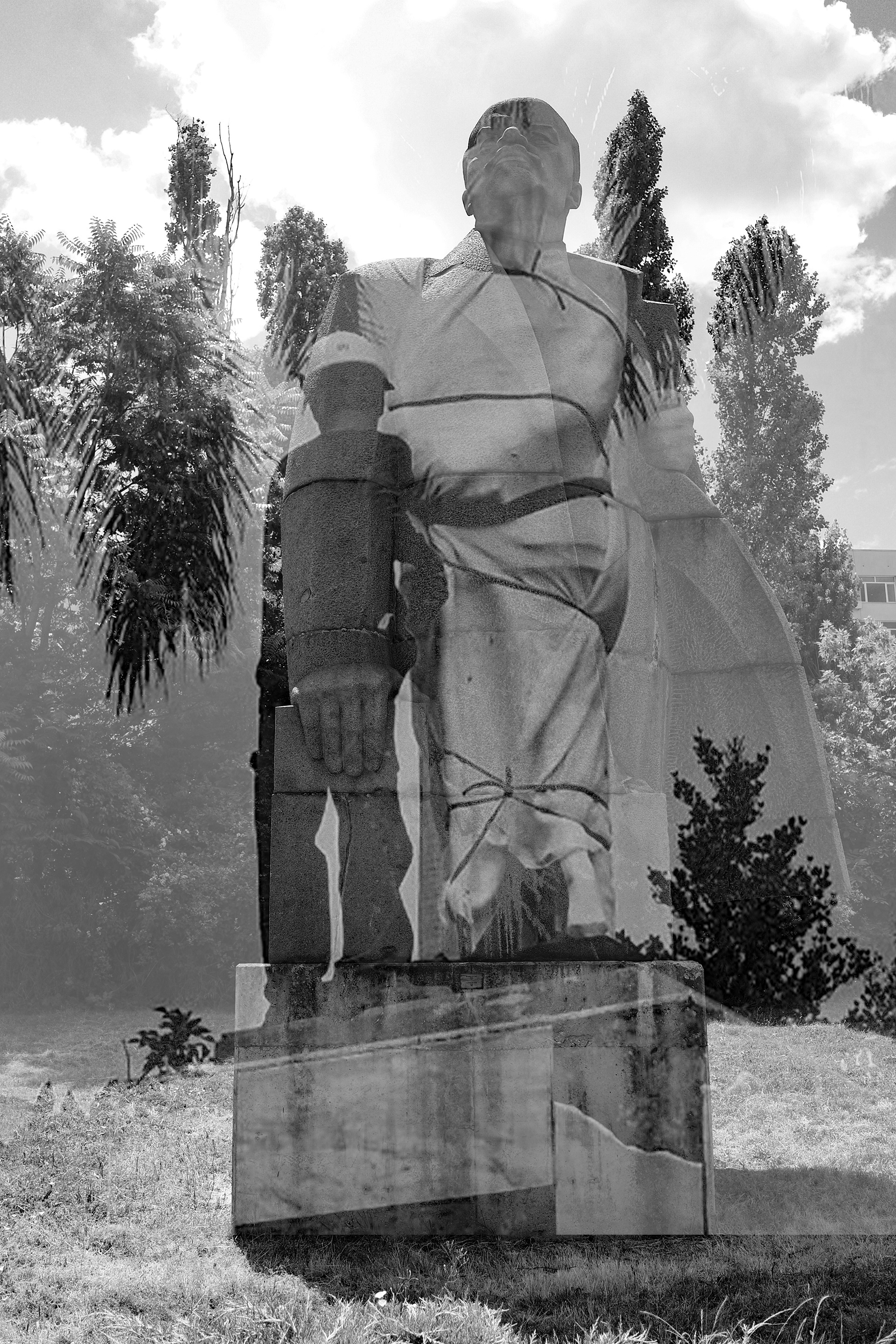
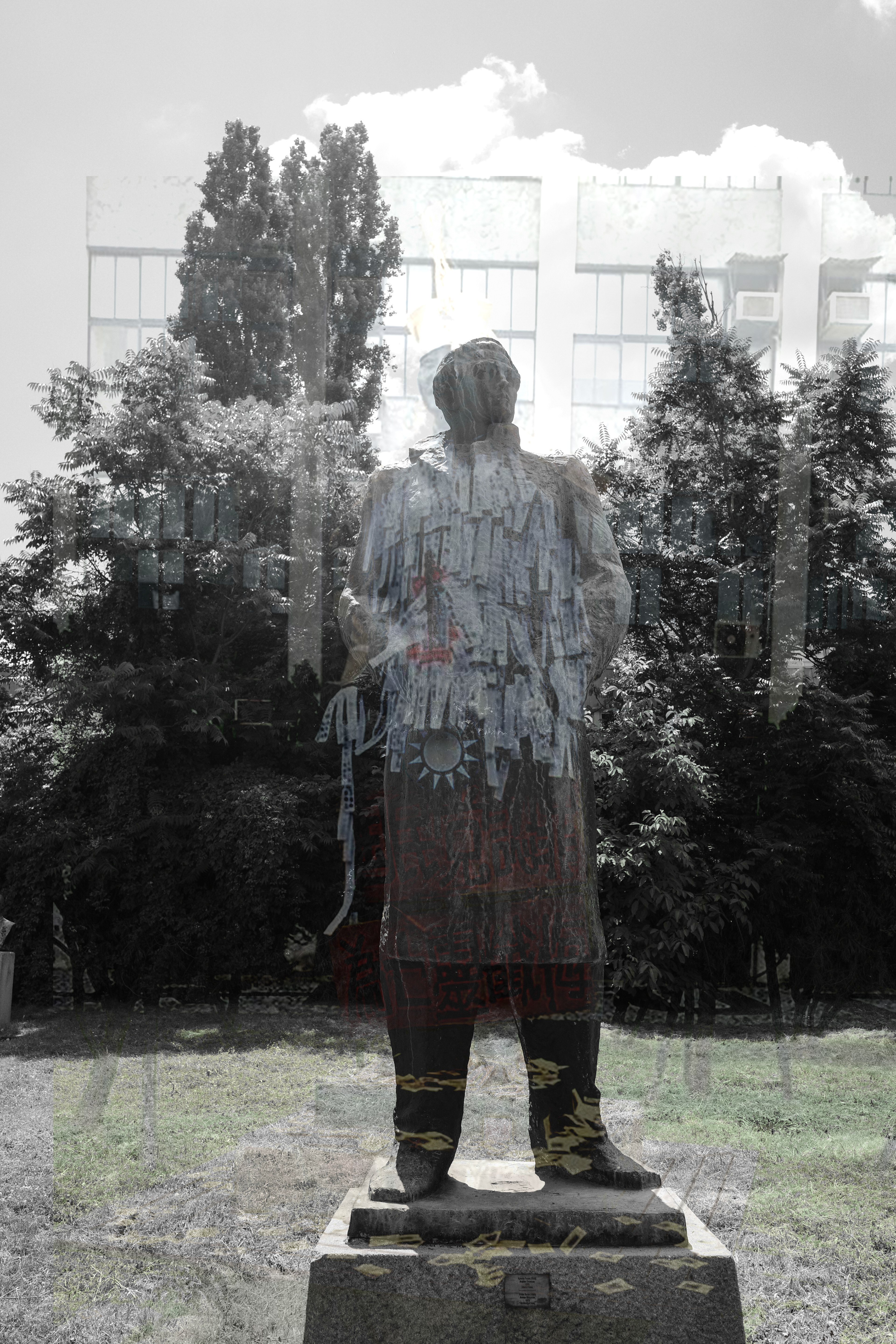
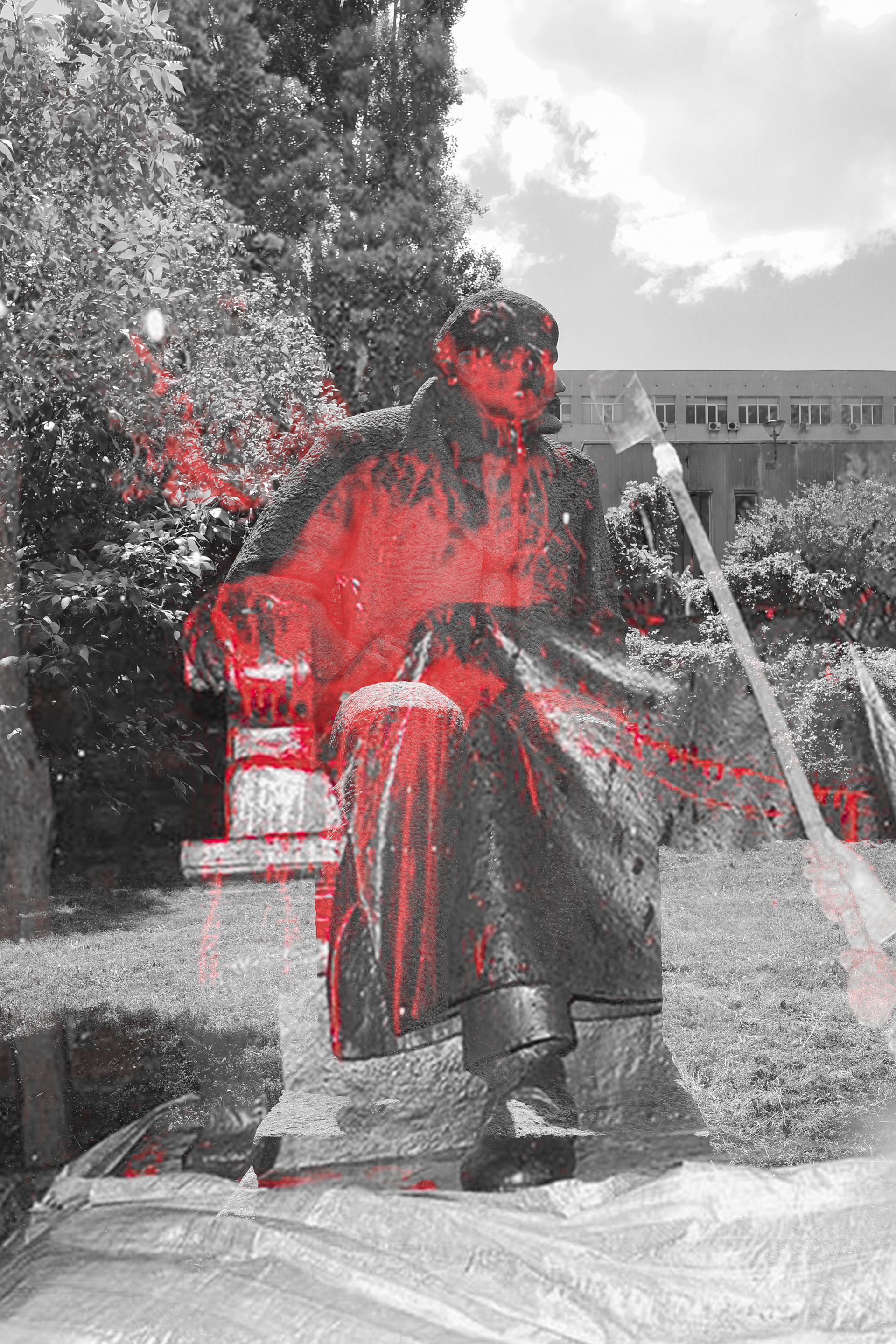
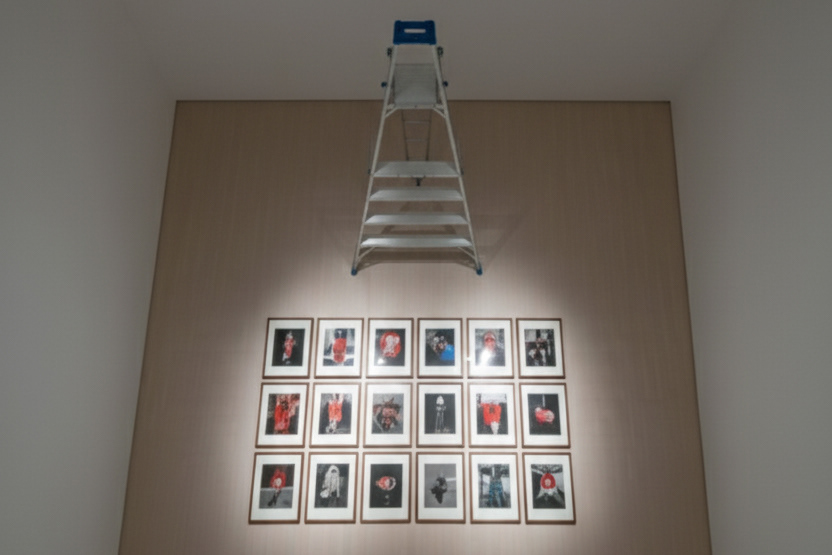
During his residency at Iatrus, Wang developed a project titled “Iconoclasm in Photography.” Drawing a parallel between Taiwan and Bulgaria—two nations that transitioned from authoritarian regimes to democratic systems during the 1980s—Wang investigates acts of iconoclasm, particularly the defacement and removal of political monuments. In Bulgaria, this is perhaps most famously illustrated by the 2011 artistic intervention that transformed a Soviet Red Army monument into a tableau of comic book superheroes. Similarly, in Taiwan, many statues of Chiang Kai-shek have been defaced or relocated in an attempt to reconcile with a difficult past. Inspired by these acts, Wang experimented with digitally overlaying defaced Chiang Kai-shek statues onto photographs of Bulgarian communist monuments. The resulting composite images evoke a complex emotional landscape—one that reflects both historical specificity and shared experience. As Wang notes, the images seemed to restore a certain sacredness to the monuments, making them strangely untouchable again. Viewers responded with hesitation, aware of the weight of memory and interpretation embedded in these contested symbols. Through this project, Wang invites a broader reflection on how societies visually negotiate with their pasts—and how photography can both document and disrupt those negotiations.